
Gather: The Foraging App
Feral Foraging, LLCEducation
4.364.00 Reviews
- Version
- 1.6.0
- Installs
- 10.00K
- Age Rating
- Everyone
Screenshots
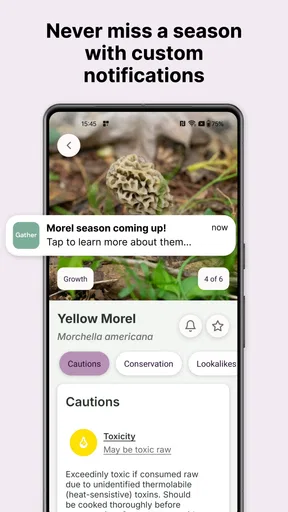
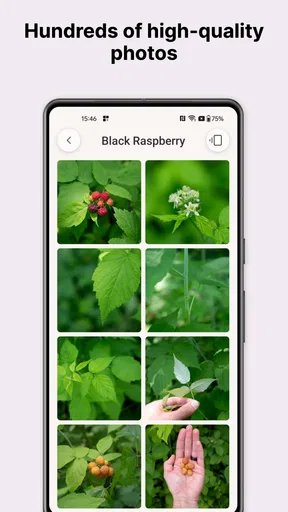
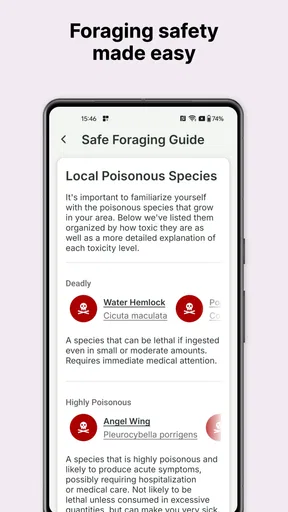
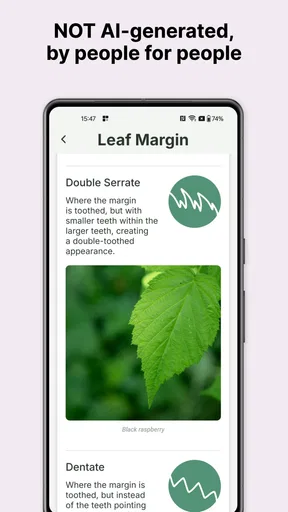
Our Review of Gather: The Foraging App
 Analysis by Appyee
I approached Gather: The Foraging App as a practical field companion rather than a replacement for careful identification. Its focus is simple: helping people learn about wild plants and mushrooms while they are outside, with enough structure to make a walk feel more observant and purposeful. After spending time with it, I think its strongest appeal is to curious beginners who want to build recognition skills gradually instead of relying on random web searches.
That distinction matters. Foraging is not a hobby where confidence alone is enough, especially with mushrooms. An app can support learning, but it should never turn a photograph or a quick match into permission to eat something. I found the most sensible way to use Gather is as an educational reference during or after a walk: notice a specimen, study its characteristics, compare what you see, and keep uncertain finds separate from anything intended for consumption.
It is a free education app from Feral Foraging, LLC, available for everyone and designed for devices running Android 7.0 or later. The app has reached over ten thousand installs and holds a 4.3 average from more than a hundred ratings, which suggests a modest but genuinely interested user base rather than a huge general-purpose audience.
How Gather feels in everyday use
I find shared use works best when everyone treats Gather as a prompt for noticing, rather than as a tool that decides what a plant or mushroom is. On a walk, one person can describe what they see while another checks the surroundings, then you can compare observations together. That simple routine gives the app a useful role without asking it to manage household accounts or replace adult judgement.
A calmer way to learn what grows around you
The best part of a dedicated foraging app is that it changes the rhythm of a walk. Instead of passing every unfamiliar leaf, flower, or fungus without a second thought, I found myself stopping to look at shape, surface, color, habitat, and growth pattern. That makes the experience more like field study than casual plant spotting.
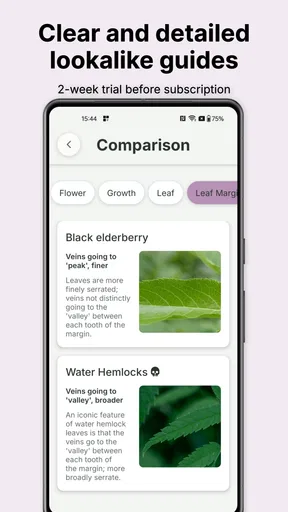
Gather fits that use particularly well because its subject is narrow. A general image-search tool may identify almost anything, but it usually treats the result as a quick answer. A broad nature app may cover birds, insects, trees, and geology all at once. Gather is more focused on the questions that arise when someone is learning about edible and noteworthy wild species: What am I looking at? What should I compare? Which details deserve attention before I make any decision?
I would use it on a slow weekend walk, not while rushing along a trail. The useful workflow is to take mental notes first, observe the specimen in its surroundings, and only then use the app to support the learning process. That order helps prevent the common mistake of seeing a suggested name and immediately treating it as certain.
A realistic beginner scenario
Imagine finding a cluster of mushrooms near a damp path. A new forager may be tempted to photograph the most obvious feature and search for a match. With Gather, the more responsible approach is to record the context in your own notes, inspect the cap and stem, look at how the mushrooms are growing, and compare several possibilities rather than accepting the first familiar-looking result.
On a family nature walk, the app can also turn a short outing into a shared learning activity. One person can look closely at leaves while another checks the surrounding habitat. Children can ask questions and practice noticing differences without being encouraged to collect or taste anything. The Everyone content rating makes that kind of educational use feel appropriate, although adult supervision and clear safety rules still matter outdoors.
For me, the app works best when it slows the user down. That may sound like a small benefit, but slowing down is exactly what beginners need. The value is not only in naming a species; it is in developing the habit of checking more than one visible feature.
Where it beats ordinary search tools
Searching the web is useful when I already know what I am trying to verify, but it becomes messy when I have only a vague description. Results can mix regional names, unrelated photographs, commercial products, and confident-looking pages that do not explain how an identification was reached. A focused app gives the learning process a clearer home.
Gather also makes more sense than keeping a collection of disconnected screenshots and browser tabs. A beginner can return to the same subject while building familiarity over time. That continuity is important because recognition comes from repeated comparison, not from memorizing a single image.
However, a specialist field guide can still be better for serious identification. Printed guides often provide more context, regional distinctions, and side-by-side comparisons. An experienced local foraging group can offer something no app can fully replace: knowledge of local habitats, seasonal variation, and the consequences of getting an identification wrong. I see Gather as a useful layer between casual curiosity and deeper study, not as the final authority.
What the current version suggests about the product’s direction
I’d approach the app on a shared device as a common reference, not as a private family space. Before handing it to someone else, I would make sure they understand that an identification is a starting point for learning, not permission to collect or eat a find. That boundary matters especially when the device is used by both adults and children, and it leads naturally to the question of how a household can coordinate its observations.
Version 1.6.0 is the point to judge today
The current release is version 1.6.0, and the app was released on July 18, 2025. Those details place Gather in a relatively early stage of its public life. I would not judge it by the standards of a long-established encyclopedia with years of accumulated regional material. Instead, I look at whether the current experience already supports a sensible learning routine and whether its direction appears useful for people who are beginning to explore wild plants and mushrooms.
What stands out is the focused identity. Gather is not trying to be a general outdoor planner, a social network, or a cooking app. Its store summary centers on wild plants and mushrooms, while the short description reduces the idea to “Gather.” That compact positioning is appealing because it leaves room for the app to become a more deliberate learning tool instead of adding unrelated features simply to appear larger.
I would be cautious about interpreting a version number as proof of a particular feature set. A release label can indicate ongoing development, but it does not automatically tell me that the app has solved the difficult parts of foraging education. The meaningful test is whether each update makes observation clearer, comparisons more useful, and safety boundaries easier for beginners to understand.
The effect of ongoing development on existing users
For someone already using the app, a newer version can be encouraging because it shows that the product is still being maintained rather than abandoned after launch. That matters in an educational reference tool: users need confidence that the experience will remain relevant as they build a personal habit around it.
At the same time, early-stage apps can feel uneven. A user may find one part of the experience polished while another feels less complete. That is not automatically a deal-breaker, but it changes how I would recommend it. I would install Gather as a low-risk learning companion, then keep a trusted field guide nearby for important identifications and local knowledge.
The free entry point helps here. Since the app costs nothing to download, a curious beginner can test whether its approach fits their learning style before deciding whether the deeper paid content is worthwhile. In-app purchases range from $6.49 to $59.99 per item, so I would look carefully at what each purchase unlocks and whether it matches my actual use before spending money.
Three habits that make the app more useful
My first recommendation is to treat every identification as a study prompt, not a verdict. After finding a possible match, I would write down the features that led there and then ask which other species could look similar. This simple habit exposes weak assumptions and makes the app more valuable than a one-tap answer.
Second, I would use it after the walk as much as during it. Field conditions are distracting, and hurried observation can produce poor conclusions. Reviewing a find later gives me time to compare several details and notice what I failed to inspect outside. This is especially useful for mushrooms, where a single surface feature can be misleading.
Third, I would build a personal “uncertain” category in my notes. Instead of collecting only successful identifications, I would keep examples that confused me. Those are often the most educational finds because they reveal which species, shapes, or growth environments I have not learned to distinguish yet. Gather becomes more than a lookup tool when it supports that kind of deliberate practice.
What the app cannot replace
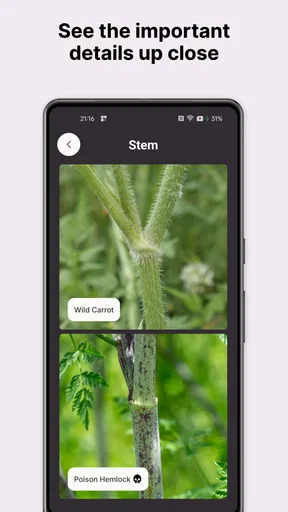
The biggest limitation is not necessarily a missing button or an awkward screen. It is the unavoidable risk of applying digital identification to food. A photograph may omit the underside of a mushroom, hide age-related changes, or fail to capture the surrounding habitat. Lighting can alter color, and a specimen can resemble a safer species while differing in a crucial detail.
That means I would never use Gather alone to decide whether something is safe to eat. A better process combines the app with a reputable regional guide, several clear observations, and advice from a qualified local expert when the stakes are high. If there is uncertainty, the correct outcome is leaving the specimen alone, not searching for a more reassuring answer.
Another limitation is that digital learning can encourage passive recognition. Seeing a picture and thinking “I know that one” is not the same as identifying it in the field. I would actively test myself by covering the name, describing the specimen first, and checking whether I can explain the distinguishing features afterward.
Who should install it, and who should skip it?
Gather is a good fit for a beginner who enjoys nature walks, wants to learn the names of local wild plants and mushrooms, and prefers a focused mobile reference over scattered internet searches. It also suits teachers, parents, and casual outdoor groups looking for a conversation starter that encourages observation.
I would be more cautious recommending it to an experienced forager who already owns detailed regional references and expects advanced taxonomy, comprehensive local coverage, or professional-grade certainty. That person may gain more from specialist books, local societies, or expert-led identification sessions.
It is also not the right choice for someone looking for a recipe collection, a harvesting tracker, or a complete outdoor navigation system. Its identity is educational and nature-focused. That narrow scope is a strength for learners, but it means the app should not be judged as an all-in-one foraging platform.
The cost decision deserves a little thought
The free price makes trying the app straightforward, but the purchase range means the long-term value depends on what the paid items contain and how often I expect to use them. For occasional curiosity, the free experience may be enough to decide whether the approach feels natural. For someone planning regular study walks, a paid option could make sense if it adds genuinely useful depth rather than simply expanding a collection of names.
I would make that decision after using the app for a few outings, not before. The right question is not whether the largest purchase sounds comprehensive; it is whether Gather improves my ability to observe and compare specimens in the places where I actually spend time. If I still need another reference for every serious question, I would put the remaining budget toward a strong regional guide instead.
What I would like to see as Gather develops
Future progress should be measured by educational clarity rather than by adding noise. I would watch for improvements that help users distinguish similar species, understand which observations matter most, and recognize when an identification is too uncertain to act on. Those changes would benefit beginners more than flashy additions.
I would also value tools that encourage responsible field behavior: reminders to respect private land, avoid damaging habitats, and leave vulnerable specimens undisturbed. Such guidance would fit naturally with an app about wild plants and mushrooms because good foraging is not only about finding something useful; it is also about knowing when not to take it.
For existing users, the important question is whether updates make the learning workflow more dependable without making it more complicated. A clean, focused experience is preferable to a crowded one. Since Gather is still a young product, I would judge its evolution by how well it turns curiosity into careful observation.
My final take after using it
Gather: The Foraging App has a clear purpose and a sensible place in a beginner’s outdoor routine. I like it most as a companion for learning vocabulary, noticing details, and turning an ordinary walk into a closer examination of the living world. The free starting point removes much of the risk of trying it, while the Everyone rating makes it approachable for family learning when an adult sets sensible boundaries.
Its most important weakness is also the one every foraging app must face: digital assistance can create more confidence than the evidence deserves. I would not use it as a safety guarantee, and I would not let it replace regional expertise or a serious field guide. Used with that discipline, it can be genuinely helpful.
If you want a focused education app for exploring wild plants and mushrooms, I think Gather is worth trying. If you need professional identification, detailed regional taxonomy, or a complete harvesting system, choose a specialist resource instead. My recommendation is to use it slowly, keep uncertain finds uncertain, and treat every result as the beginning of better observation rather than the end of the investigation.
Verdict
Strengths of Gather: The Foraging App
- Helps identify edible plants with clear, practical reference details.
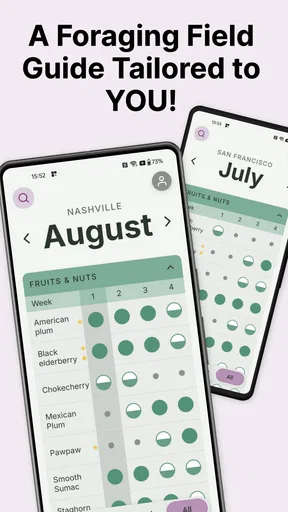
- Seasonal information makes planning local foraging trips easier.
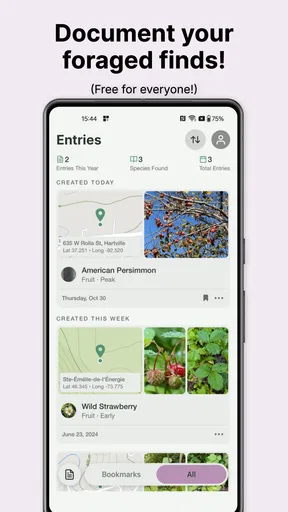
- Lets users record discoveries and build a personal foraging history.
- Useful for beginners who want guidance before exploring outdoors.
- Encourages attention to local biodiversity and natural surroundings.
Limitations of Gather: The Foraging App
- Plant availability and details may vary significantly by region.
- Some useful features may require an account or paid access.
- It cannot replace expert advice for confirming plant safety.
- Outdoor use may be inconvenient without reliable mobile connectivity.
- Regular updates may be needed to keep seasonal information accurate.
Similar Picks in This Category
View All
Duolingo: Language Lessons
Duolingo4.7

Google Classroom
Google LLC2.8

Unacademy: Learn & Crack Exams
Unacademy3.2

Bible App for Kids
Life.Church4.4

Cake - Learn English & Korean
Cake Corp.4.7

Brainly: AI Homework Helper
Brainly4.5
Frequently Asked Questions
What is Gather: The Foraging App used for?
Gather: The Foraging App is designed to help users learn about wild plants, mushrooms, and other natural foods while exploring outdoors. It can support foraging research by providing identification guidance, useful information, and ways to organize discoveries. However, it should be treated as an educational companion rather than a guaranteed identification service, especially when dealing with plants or fungi that may be poisonous.
Can Gather identify plants and mushrooms accurately?
The app may help narrow down possible plant or mushroom matches using visual information and reference details, but no mobile application can guarantee completely accurate identification in every situation. Appearance can change with age, season, location, and lighting. Always compare results with several trusted field guides and consult an experienced local forager or expert before touching, collecting, or consuming anything found in the wild.
Is Gather: The Foraging App suitable for beginners?
Yes, Gather can be useful for beginners who want to become more familiar with foraging and learn how to observe species in their natural habitats. Its information may make outdoor exploration more approachable, but new users should begin with common, easily recognized plants and avoid experimenting with edible species until they have received reliable guidance. Basic knowledge of local laws, habitats, and safety is also essential.
Does Gather work without an internet connection?
Offline availability can depend on the app version, the feature being used, and whether information has been saved before leaving an internet-covered area. Users planning to forage in remote locations should open the app in advance, check which guides or records remain accessible offline, and download any available resources beforehand. It is also wise to carry a printed guide, charged phone, and backup navigation method.
Is it safe to eat plants or mushrooms identified with Gather?
You should never eat a wild plant, berry, or mushroom based only on an app result. Misidentification can cause severe illness or may be fatal, and some dangerous species closely resemble edible varieties. Use Gather only as one research tool, confirm the identification through multiple authoritative sources, follow local expert advice, and learn the specific safety rules for your region before collecting or consuming anything.
